It is possible to use effective pest control methods in the home. This combines natural deterrents, physical barriers, and targeted treatments to manage insects and animals around your home and garden.
Here are some natural & eco-friendly pest control ideas for inside the home.
Essential oil sprays: Mix 2 cups of water, 1 cup of white vinegar, and 50 drops of peppermint essential oil to spray near doorways and entry points to deter ants and flies.
Potted herbs: Place fresh basil or mint pots near doors and windows to naturally repel flying insects.
DIY fruit fly traps: Fill a small jar with apple cider vinegar and a few drops of dish soap to catch fruit flies.
Diatomaceous earth: Sprinkle a light food-grade barrier of diatomaceous earth along baseboards or entry points to deter crawling bugs.
Here are some natural methods for garden pest control.
Encourage beneficial insects: Plant flowers like fennel, dill, and yarrow to attract ladybirds and lacewings that eat garden pests.
Physical barriers: Use insect netting over delicate vegetable beds to block birds, caterpillars, and larger pests.
Homemade sprays: Mix soapy water for aphids, or combine crushed garlic and chili powder with water to deter chewing insects.
Slug and snail controls: Set out shallow beer traps or use organic iron-chelate pellets around vulnerable plants.
Pest Maintenance and Exclusion
Seal entry points: Caulk cracks around windows, doors, and utility pipes to stop rodents and insects from getting inside.
Manage yard perimeters: Keep mulch and woodpiles at least 30 cm to several meters away from your home’s foundation to prevent termites and ants from moving indoors.
Long-term barrier sprays: Apply ready-to-use perimeter products like Bunnings Workshop recommended exterior surface sprays to create a chemical shield against spiders, ants, and cockroaches.
If you need a residential, industrial or commercial pest control company in Sydney and surrounding suburbs, the blogging team members have had good experiences with Sydney Pest Control and recommend you contact them. They care about their clients and earn a client’s satisfaction every time they treat their home by treating it as their own.
If you tell them what specific pest you are dealing with (ants, rats, aphids, termites, spiders, etc.) and where they are (kitchen, lawn, bedroom), they can give you an effective solution or explain a treatment they do at a competitive price.
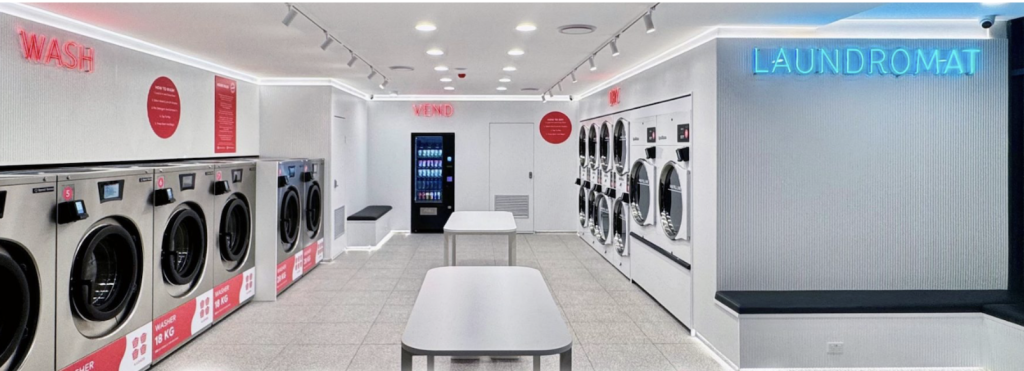
In 2026 we live in an extremely fast-paced world, a busier than ever work life through to managing household tasks efficiently is more important than ever before. Among these tasks is doing the weekly laundry. It is a significant time out of the week, especially if you have a large family. This is where the true magic of a self-service laundromat comes into play.
The latest laundromat technology offers unparalleled flexibility and cost-effectiveness. A practical solution to your laundry needs. Below are the true advantages of using a self-service laundromat:
Flexibility
One of the most compelling benefits self-service laundry facilities offer is their flexibility. Open around the clock everyday including public holidays, these laundromats cater to all lifestyles, whether you’re a morning person or a night owl. Availability of laundromats in communities now means you can fit laundry into your schedule whenever and where is most convenient, not when it’s dictated by traditional business hours our past limited availability of them. The range of machines available at a self-service laundromat, from standard to high-capacity washers and dryers allows you to handle everything from small loads to bulky items like blankets and curtains.
Cost-Effective Laundry Solution
Using a laundromat is really cost-effective when compared to owning and using your own. Ongoing machine costs ranging from purchasing and maintaining a washer and dryer at home, as well as electricity and water rates is expensive. Using a laundomat becomes an attractive option for managing your laundry needs economically. It removes the need to invest in expensive appliances, pay for repairs, or worry about increasing home electricity bills.
Superior Clean: Professional-grade equipment optimizes water extraction and temperature control, delivering a deeper and more hygienic clean than standard home appliances.
High-Efficiency Machines Save Both Time and Energy Costs
Today’s self-service laundromats are equipped with state-of-the-art, high-efficiency machines that offer superior cleaning efficiency and faster drying times. This not only ensures an exceptional clean for your clothes but also reduces the amount of weekly laundry time.
Instead of waiting up to 4 hours for your washer and dryer to clean your bed sheets. Leverage the power of the advanced machines, you can complete your laundry in a fraction of the time it would take at home, allowing you to get back to what matters most in your life.
Simultaneous Washing: Instead of running consecutive cycles all day at home, you can load multiple machines at once. Your entire week’s worth of laundry can be washed and dried simultaneously in under an hour.
Social Interaction
Beyond the tangible financial benefits, laundromats often serve as community hubs, providing a unique social environment where people from all walks of life can meet and interact in a safe environment. Many laundromat-goers find comfort in the routine of laundry day, seeing familiar faces, and occasionally sharing laundry tips and life hacks. Some laundromats have staff or resources available to help with any questions you might have, making your laundry experience as enjoyable & as smooth as possible.
An Eco-Friendly Choice
Using a self-service laundromat is an eco-friendly choice for those conscious about their impact on the environmental. High-efficiency machines use less water and energy per load compared to older, home washing machine models. This collective use reduces overall consumption of precious Australian resources, making laundromats a greener choice for your laundry needs.
Large Powerful Machines
Residential machines often struggle with large items like comforters, duvets, rugs, and heavy winter coats. Laundromats often have extra-large, front-loading machines designed to thoroughly clean bulky items without straining the motor.
Summary
The benefits of using a self-service laundromat, rang from flexibility and cost-effectiveness to the use of high-efficiency machines, the social environment, and eco-friendliness. This make it an excellent choice for anyone looking to streamline their laundry routine.
Whether you’re a busy professional, a student, or someone looking to minimize their household chores, a self-service laundromat offers a practical, efficient, and affordable solution to keeping your clothes clean and fresh. Next time laundry day rolls around, consider the advantages of a self-service laundromat and make the most of this convenient, modern-day amenity.
If you are in Sydney and need a laundromat in the North Strathfield area, the blogging team recommend you check out Loadit Laundromat. They are located at shop 5, 27-29 George Street, North Strathfield.
It is a new, modern facility with the latest technology for their clients. They are open from 7am to 10pm seven days a week.
You can email them on support@loaditlaundromat.com.au and find out more about them via there website here: https://loaditlaundromat.com.au/
We often get asked what building estimators do. In the current environment of rising construction costs, we came across this detailed explanation and thought readers would find it as informative as we did!
Reliable, accurate construction cost estimating services are an integral part of a project’s success, which is why a building estimators services are designed to guide, home owners, project owners, architects, engineers, and contractors to make informed decisions about the budget and resources required for their projects from design through completion. An experienced team of cost estimating professionals tailor their services to address specific project requirements, from utilising particular software to meeting the owner or agency-specific standards, to deliver accurate and reliable cost estimates based on the most up-to-date industry information.
The typical cost estimating services offered include:
Conceptual Estimates: Conceptual cost estimates assist in the early stages of project planning by allowing our project owners and designers to assess the feasibility of their projects and make informed decisions about their budgets.
Design Estimates: The estimator works with architects and engineers throughout the development of the Schematic Design through Construction Documents to deliver accurate cost estimates that reflect the project’s scope and requirements.
Value Engineering: From time to time it may be necessary to perform a value engineering session on an estimate. If the client’s budget requirement is not able to be met, the estimate may need to be reviewed to see where money can be saved or better spent. They assist in optimising the cost of construction projects by identifying opportunities for cost savings and improved efficiency.
Change Order Estimates: After a project contract is signed, there may be times when change orders are needed. The Quantity Surveyor can assist in accurately assessing the cost implications of changes to the scope of work by comparing the original scope and schedule with the revised scope of work.
Bid Evaluation/Check Estimates: The estimator can assist in evaluating bids to determine if a contractor’s bid is reasonable, as well as whether the bid included all relevant scope of work in the contract documents.
When working with clients to determine a project’s budget, the quality surveyor draws upon their extensive knowledge and comprehensive industry experience gained through delivering cost estimates for a multitude building companies, public agencies and developers.
They also leverage their years of knowledge of working with construction materials, labor, and equipment costs to ensure clients can make informed decisions by fully understanding their project’s real-time costs, risks, and potential savings at every phase. This experience ensures projects are delivered on time in the smoothest possible way and within budget!
If you are looking for assistance with the construction cost planning of your project, members of our team have had a very good experience in this area with Sydney based Trinity Madison Construction Solutions. We recommend you check out their range of services from project cost planning through to insurance reinstatement valuations, visit their website here: https://tmcs.com.au
When exploring the endless opportunities for outdoor adventures in Australia or lounging on a beach, hiking through the Royal National Park your phone is likely by your side, capturing memories or helping you navigate.
However, outdoor environments, even when simply enjoying a picnic, can pose risks to your device.
Here’s how to protect your phone while enjoying the best of Australia’s natural outdoor beauty. There maybe several things you may never have considered.
1. Invest in a Quality Waterproof Case
Australian beaches are spectacular, but water and electronics don’t mix. A waterproof case is your first line of defence against accidental splashes, unexpected rain, or even a quick drop in the surf.
Features to Look For in a Waterproof Case:
IP68 Rating: Ensures protection against water and dust.
Slim Design: Avoid bulky cases that might hinder usability.
Durability: Opt for cases tested against drops and impact.
Popular choices include brands like LifeProof, Catalyst, or local retailers offering rugged options suited for beachgoers.
2. Use a High-Quality Screen Protector
Sydney’s beaches and parks are filled with sand, which can easily scratch your screen. A good screen protector not only shields against scratches but also minimises damage from minor impacts.
Types of Screen Protectors to Consider:
Tempered Glass: Highly durable and resistant to scratches.
Anti-Glare: Ideal for outdoor use, reducing reflections in bright sunlight.
Full Coverage: Covers edge-to-edge for maximum protection.
Bonus tip: Pair a screen protector with a phone case that includes a raised edge to safeguard your screen during accidental drops.
3. Keep Sand Out of Ports and Speakers
Beaches are paradise – but sand particles can wreak havoc on your phone’s charging ports and speakers.
Tips to Prevent Sand Damage:
Use Port Covers: These small silicone plugs can block sand from entering your charging port.
Keep Your Phone in a Ziplock Bag: A cost-effective way to prevent sand intrusion while still allowing touch functionality.
Clean Regularly: After your trip, use compressed air to gently remove any lingering particles.
4. Protect Your Phone From Heat Damage
Australian summer days can be scorching, especially at outdoor spots. High temperatures can overheat your phone, affecting performance and battery life.
How to Keep Your Phone Cool:
Avoid Direct Sunlight: Keep your phone in a shaded spot or under a towel.
Turn It Off When Not in Use: Helps reduce overheating from constant activity.
Carry a Cooling Towel: Wrap your phone for a quick cool-down if it overheats.
5. Carry a Reliable Dry Bag
For activities like kayaking in Sydney Harbour or paddle boarding at Watsons Bay, a dry bag is an essential accessory. It provides an added layer of protection for your phone and other valuables.
6. Backup Before You Go
Despite your best efforts, accidents can happen. Before heading out, back up your phone to the cloud or a computer. This way, even if your phone is damaged, your precious photos and data remain safe.
Need Help From a Professional Phone Repairer…
If in Adelaide and your need a laptop or phone repair service, the blogging team have had great experiences with Sam Phone Repair and recommend you enquire if they can help you with your issue. Contact them on +61 411 262 192 or visit the website here: https://samphonerepair.com.au/
Conveyancing is the legal process of transferring the ownership of a property from one party to another, typically from a seller to a buyer. It involves preparing, verifying, and lodging legal documents such as sales contracts and titles, conducting property searches, managing finances, and ensuring the transfer of ownership is compliant with relevant property laws. Most people hire a licensed conveyancer or solicitor to handle these complex legal tasks on their behalf, ensuring the process is smooth and their rights are protected.
Key Steps in Conveyancing…
The conveyancing process generally follows these stages:
Pre-contract: A conveyancer prepares and reviews the contract of sale, arranges inspections (like building and pest reports), and helps secure the necessary finance.
Pre-completion: The conveyancer conducts property searches to check for any legal issues or third-party rights, and they will often hold funds in trust for the transaction.
Exchange of Contracts: The buyer and seller formally exchange the contract of sale, with a deposit usually paid at this stage.
Settlement: This is the final stage where the remaining balance of the purchase price is paid, legal documents are lodged to transfer the title, and the property officially changes hands.
What a Conveyancer Does…
A licensed conveyancer or solicitor performs crucial tasks to ensure the property transfer is legally sound and efficient:
Manages legal documents: They prepare, verify, and lodge all necessary legal documents for the transfer.
Conducts property searches: They research the property’s title and search for any potential legal issues or restrictions.
Handles financial adjustments: They manage the financial aspects of the settlement, such as adjusting rates and paying the purchase price.
Ensures legal compliance: They ensure the entire transaction adheres to all relevant property laws and regulations.
Liaises with parties: They communicate with other parties, such as lenders, the other party’s conveyancer, and government bodies.
Why You Need a Conveyancer…
While you can do your own conveyancing, hiring a professional offers several benefits:
Peace of mind: They handle the complex legal details so you don’t have to.
Protection of rights: They protect your legal rights and obligations throughout the transaction.
Smooth transactions: Their expertise ensures the process runs smoothly and meets deadlines.
Early issue identification: They can identify potential problems with the property early on.
If you’re facing the need to find an expert in conveyancing and need guidance, the blogging team have had great experience with The Conveyancing Shop that was established in 1990. They recommend them to readers and encourage you to visit their website to learn more about them here: https://conveyancingshop.com.au
Skip bins are large metal containers that are designed to hold large amounts of waste. They are made from durable materials such as steel and come in a range of sizes, making them suitable for different types of waste disposal needs. See below some of the advantages of using a skip bin.
Efficient Waste Disposal: Skip bins are an efficient way of disposing of waste. By hiring a skip bin, you can dispose of large volumes of waste quickly and easily without having to make multiple trips to the tip. When taking rubbish to the tip you will often find you have to wait in long ques to empty your rubbish. Tips waits can be up to 1 hour in major cities like Sydney, Melbourne and Brisbane. A skip bin is collected by truck when you’re done, saving you the time and hassle of visiting the tip yourself.
Most skip bins also have doors at the back, allowing you to wheel rubbish straight in. If you have forklifts or cranes on site, rubbish can also be dropped in from the top.
Cost-Effective: Skip bins are a cost-effective way of disposing of waste. The cost of hiring a skip bin is often much cheaper than other waste disposal options, especially if you have a lot of waste to dispose of. For example, the average tip cots is now at approximately $400 per tonne if you are visiting your local waste tip. A 4 cube skip bin can potentially hold 4 tonnes of rubbish. The cost of using a skip bin can be as much as 75% cheaper. If you are looking for cheap skip bin hire, this is definitely the way to go
Convenience: Hiring a skip bin is a convenient way of disposing of waste. Our skip bins are dropped off at your location whether it be a home, office, construction site or public area. Once fill, you simply call skip bin co and we collect it. This saves you time and effort compared to taking multiple loads in trailers or trucks to the local tip. Skip Bin Co hires bins in all major cities across Australia such as Sydney, Canberra, Brisbane, Melbourne, Adelaide, Perth and Hobart. Skip Bin Hire near me is made easy by placing a booking online or over the phone.
Environmentally Friendly: Skip bins are an environmentally friendly way of disposing of waste. When you hire a skip bin, the waste is sorted and disposed of in an environmentally friendly way. This reduces the amount of waste that ends up in landfill, which is beneficial for the environment. We have a range of bin options that are cheaper priced if all your waste is of the same material. For example, if hiring a green waste bin and just removing trees and branches, this ends up being really cheap as this can be recycled.
Safety: Skip bins are designed with safety in mind. They are built to withstand heavy loads and have safety features such as lockable lids to prevent unauthorized access. This ensures that the waste is disposed of safely and securely. Their strong metal structures can support heavy waste loads. They confine it to a secure space which stops waste blowing around and into the environment
Versatility: Skip bins come in a range of sizes, making them suitable for different types of waste disposal needs. Whether you are renovating your home, cleaning out your garage, or undertaking a large construction project, there is a skip bin size that will suit your needs. Skip Bin Hire Co has both skip bin and hook bins for hire, covering all sizes.
2025 proved to be a watershed year for web development. The landscape has always been fast-paced, with new tools and frameworks emerging almost every day. But in 2025, the pace quickened exponentially.
This rapid change is largely due to the efficacy of AI tools and how they’ve tripled productivity. Just a few years ago, we were debating whether tools like GitHub Copilot were even reliable enough for basic autocomplete. Fast forward to today, and AI isn’t just generating components; it’s scaffolding entire full-stack applications, leading many to wonder if it might truly “take our jobs” in the future.
As we look toward 2026, we’ll explore the trends set to define web development – not as distant predictions, but as near-term outcomes of where the ecosystem is already headed. Here is what the next year holds for the way we build, ship, and maintain the web.
Sign up for The Replay newsletter
The Replay is a weekly newsletter for dev and engineering leaders.
Delivered once a week, it’s your curated guide to the most important conversations around frontend dev, emerging AI tools, and the state of modern software.
Fields marked with an * are required
1. AI-first development
AI tools have evolved from simple code-completion utilities into a core component of the development lifecycle. We have moved toward agentic workflows, where developers act as architects, overseeing AI agents that can scaffold entire features from a Figma URL or a natural language prompt.
AI is also reshaping how developers explore and understand code. Instead of reading through large codebases manually, teams use AI to explain unfamiliar logic, trace data flow, and surface edge cases. This shortens onboarding time and makes large systems easier to navigate.
However, the most important change is how applications are increasingly designed with AI in mind. That means generating UI variations, adapting content dynamically, or supporting AI-driven features directly in the product. Frontend developers are now building systems that expect AI input and output as part of normal operation.
This trend is expected to continue into 2026. Teams that embrace AI-first development will spend less time on mechanical work and more time on structure, constraints, and user experience. The tools won’t write perfect code, but they will change where developers focus their energy.
2. Meta-frameworks will become the new default
The era of choosing a router or configuring a bundler is largely over. In 2026, meta-frameworks like Next.js and Nuxt will be the standard entry points for most professional web projects.
Over the years, these platforms have evolved into one-stop solutions. They handle routing, data fetching, caching, rendering strategies, and API layers. With the stabilization of Server Actions and Functions, the backend for many web apps is now just a folder inside the frontend repository.
The rise of generative AI has also contributed to this shift. Most generative UI builders now produce meta-framework projects by default. v0, Vercel’s own builder, is a good example; it outputs Next.js applications out of the box.
While React remains dominant, its meta-frameworks keep pushing boundaries. Teams that have migrated to frameworks like Next.js or Astro report faster load times, lower infrastructure costs, and much less setup overhead.
While meta-frameworks provide the structure, the TanStack suite (Query, Router, Table, Form) has become the de facto standard for the logic layer.
Long before the recent wave of meta-frameworks, libraries like TanStack Query and TanStack Table were already solving hard problems around data fetching, caching, and state synchronization in a way that felt practical and framework-agnostic.
Despite already covering large parts of the frontend stack, TanStack expanded further in 2025. New and evolving utilities like TanStack DB, TanStack Form, TanStack Store, TanStack AI, and TanStack Start pushed the suite beyond simple libraries into a unified ecosystem. This is evident in how many articles we’ve published on TanStack this year alone.
At this point, TanStack feels like the Swiss army knife of frontend development.
These tools are already influencing how applications are built. In 2026, this TanStack-driven mindset is likely to be even more common. Frontend applications will be more modular, more portable, and easier to evolve over time.
The TanStack ecosystem is setting expectations around what good abstractions look like and, in doing so, is reshaping how developers think about building and scaling frontend systems.
4. Wider adoption of TypeScript and server functions for backendless apps
In 2026, writing plain JavaScript for a professional project will be considered a legacy approach. TypeScript has become the baseline, and it is fueled by end-to-end type safety.
Server functions and managed backends have accelerated this shift. Instead of building and maintaining a separate backend, frontend teams increasingly rely on server functions, edge runtimes, and hosted data layers. These tools blur the line between client and server, and TypeScript acts as the glue that holds everything together.
tRPC is a clear example of this pattern. By allowing frontend code to call backend functions with full type inference, it removes an entire class of problems around API contracts. There are no schemas to sync and no manual types to maintain. The client and server scale together, guided by the same type system.
In 2026, the backend will be expressed as typed functions rather than long-lived services. TypeScript is a key part of what makes this possible at scale, and its role will continue to grow as frontend and backend responsibilities keep converging.
5. Increased adoption of the React compiler
Following its v1.0 release in October 2025, the React Compiler has seen increased adoption. In 2026, manually using useMemo, useCallback, and React.memo will be seen as legacy optimization that is largely unnecessary in everyday development. The compiler now handles memoization and performance tuning automatically at build time.
Developer experience will improve as a result. Code will become simpler and easier to reason about because it no longer needs to be tailored around performance concerns. Developers can write more straightforward React components and trust the compiler to handle the heavy lifting. This also lowers the barrier for newer developers, who can focus on behavior and structure instead of optimization patterns.
Adoption is already being pushed forward by the ecosystem. Major platforms like Next.js 16, Vite, and Expo have integrated the React compiler into their tooling. In many cases, it can now be enabled when creating new applications, making it part of the default setup rather than an experimental add-on.
As more teams experience the performance gains and the simpler mental model it enables, the compiler will move from an optional optimization to an expected part of the React toolchain. Over time, it will reshape how React code is written, reviewed, and taught.
6. More applications move to the edge
In late 2024, I wrote a guide on self-hosting Next.js applications with Coolify to avoid Vercel’s unpredictable billing and the vendor lock-in inherent to the platform. Fast forward to today, and the landscape has shifted dramatically; edge computing is rapidly becoming the default deployment target. What started as a way to speed up content delivery has evolved into a primary environment for complex application logic. For many teams, migrating to the edge is no longer a question of “if”, but “when.”
The core appeal remains the same: running code closer to users significantly reduces latency. Requests travel shorter distances, responses arrive faster, and applications feel more responsive. Edge runtimes also simplify automatic scaling, handling traffic spikes without the need for complex infrastructure planning.
However, the true driving force behind this shift is how naturally modern framework features, such as server functions, streaming responses, and partial rendering, align with edge execution. This transition is further sped up by the advent of generative AI tools such as v0 and Lovable, which can generate and deploy MVPs to the edge in minutes with a single click.
In 2026, edge awareness will be a core frontend skill. As more applications default to edge deployments, developers will need to design with constraints in mind and treat performance as part of everyday development, not a final optimization step.
7. CSS: Utility meets native CSS and design systems
The long-running divide between utility-first styling and traditional CSS is narrowing, and modern native CSS features are a big reason why.
Utility classes popularized fast, consistent styling and tight feedback loops. They made design systems easier to enforce and reduced the need for large, handcrafted stylesheets. At the same time, native CSS kept evolving. Features like container queries, cascade layers, custom properties, and modern color functions made CSS far more expressive than it used to be.
What’s emerging is a hybrid approach. Utilities are still used for layout, spacing, and common patterns, but they increasingly sit on top of native CSS primitives rather than replacing them. Design tokens are now expressed as CSS variables. Variants and themes are handled with layers and selectors instead of build-time processing magic. Components rely more on the cascade again, but in a controlled, predictable way.
Design systems stand to benefit the most from this shift. Instead of generating large sets of utility classes, teams can define a small, stable foundation in CSS and expose it through simple utilities or component styles. This makes systems easier to reason about, easier to customize, and less dependent on specific tooling.
Heading into 2026, utilities will still be part of the workflow, but they’ll work alongside native CSS rather than around it. The result will be styling that is faster to write, easier to maintain, and better aligned with how the platform itself is evolving.
Security became impossible to ignore in 2025. The web development ecosystem saw a noticeable rise in reported vulnerabilities, including high-profile issues in widely used tools. We can point specifically to the Next.js middleware vulnerability and the React2Shell (CVE-2025-55182) vulnerability.
Part of the problem is scale. React applications now handle authentication, data access, and business logic that once lived exclusively on the backend. Meta-frameworks and server functions make this powerful, but they also expand the attack surface. A misconfigured middleware, a leaky cache, or an unsafe server function can have real consequences.
In response, 2026 is likely to bring more defensive defaults. Frameworks will continue to lock down common footguns, introduce safer APIs, and make insecure patterns harder to reach accidentally.
Expect better static analysis, clearer warnings during development, and tighter integration between frameworks and security scanners. Vulnerabilities will still happen, but they’ll be easier to detect early and harder to ship unnoticed.
Conclusion
Building for the web in 2026 will be defined by coordination over implementation. Developers will write less boilerplate and more intent. As AI automates repetitive tasks, the React Compiler optimizes performance, and meta-frameworks abstract away infrastructure, the role of the frontend developer has fundamentally changed.
Chair Hire Melbourne is a leading hire company in Melbourne and confirmed in an exclusive interview with Metro Cities Media that the trend is continuing to grow for weddings event planners to hire white Tiffany Chairs for guests to sit on at weddings they arrange.
The tiffany chair, also know as the Chivari chair, is the most elegant event chair available for hire. This chair is the most sought after for weddings and engagement parties in Sydney. The Chivari chair can transform a wedding setting, offering pure beauty and comfort. For those wanting a more modern look than the traditional white or gold tiffany chair hire, the clear tiffany chair, especially for wedding receptions is increasing in popularity.
The modern Tiffany chair look is very much in line with its original design crafted in 1855. They look extremely stylish, are very practical and exceptionally comfortable to sit on for long periods, as required for corporate and celebratory events.
Lavish events held across Melbourne, and other cities of Australia, require large numbers of tables and chairs. Event organisers have been able to accommodate this by engaging specialist hire companies like Chair Hire Melbourne that provide Tiffany chairs in any quantity that is required, as well as marquee hire services.
The Tiffany chair was designed in 1807 by Italian designer Giuseppe Gaetano Descalzi. The designer lived in the town of Chiavari, on the northwestern Italian coast. Because of its design origins, the chair is also known as a Chiavari chair.
The chair was accepted as a great design then that became known as the tiffany chair and brought rise to many factories opening in Chiavari and surrounding towns. Today it is still seen as an elegant chair to suited to compliment regal events and is now manufactured globally.
Dean Mortensen is a Sydney based storyboard artist and concept illustrator with over 30 years experience working as an Art Director in the Advertising and Film industries. His work spans everything from features, serial dramas, short films and television commercials and expertise also extends beyond delivering just storyboard narratives.
Dean also creates visual concepts for Events and Activation agencies, Film Production companies, as well as concept activations for retail brands. As a freelance storyboard artist based in Sydney, Dean’s extensive experience adds value to help visualise and bring client projects to life.
For over the past 15 years Dean has created production sketches and concept boards for some of Australia’s leading Event & Experiential companies to help them bring their visions to life for their client presentations – as well as Product and Packaging Concepting for Leading FMCG and Brand Strategy companies. Concept illustrations are an invaluable tool in bringing ideas to life to ultimately sell to the client.
Very comfortable working remotely or directly with his clients and directors globally, Dean’s use of the many meeting apps available today means there is no constraint to working internationally.
Leading Sydney painting company Roberts Trading Pty Ltd confirmed in an interview with Nihal Gupta Digital the top luxury homes painting trend in 2025.
Roberts Trading Pty Ltd is a family-owned business with unmatched commitment to customer satisfaction, ensuring that every client receives the best possible painting service. A team that’s passionate about attention to detail. Delivering an exceptional paint finish on every job and a 5-year workmanship guarantee on all services.
The leading Sydney painting Company confirmed that earth-inspired colour palettes are dominating in 2025. Luxury homeowners have certainly been leaning towards earthy hues that evoke a sense of calm and connection with mother nature. Warm terracotta’s, soft olive greens are particularly popular as well as muted clay tones. Clients have been particularly using these colours in both contemporary and classic homes, creating a grounded, timeless feel.
Mr Dougall Roberts, Founder and Principal of Roberts Trading Pty Ltd said, “Despite earth-inspired colour palettes dominating in 2025, coastal neutrals used with blues are a close second, especially for modern interiors. Sydney residents are inspired by the Sydney’s coastline, colours like ocean blue, sand beige, and misty grey are favourites and give a feel of serenity. Colours that reflect natural light and popular especially with architects of beachside apartments and homes in open, airy neighbourhoods.”
At the recent Master Painters Australia awards, Roberts Trading Pty Ltd were awarded; Winner – residential (single dwelling) repaint over $50,000 – Killara project with James Samuels, Highly Commended – heritage & restoration and finalists in 4 more categories, including spray painting, industrial finishes & residential
About Roberts Trading Pty Ltd
Roberts Trading Pty Ltd are a team of professional painters in Sydney boasts over 150 years of collective experience and is committed to delivering first class commercial, industrial, strata, and residential painting services.
They offer a comprehensive range of professional painting services, including interior and exterior house painting, enamel application to woodwork trim, timber staining with varnish finish, decking oiling or painting and restoration, texture coating, faux and feature walls, concrete/steel roof painting, floor coatings, driveway painting or sealing, and restoration & repairs.
The company promises to elevate a space with their unwavering commitment to excellence and meticulous attention to every aspect of your project. All work completed with a 5-year workmanship guarantee.
To learn more about Roberts Trading Pty Ltd, and the array of painting services they offer, by visiting their website here: https://robertstrading.com.au
Mr Dougall Roberts
Roberts Trading Pty Ltd
Address: Unit 7/10/12 Girawah Place, Matraville Sydney NSW Australia 2036

























 Sign up for The Replay newsletter